

Nuclear Medicine
What is Nuclear Medicine?
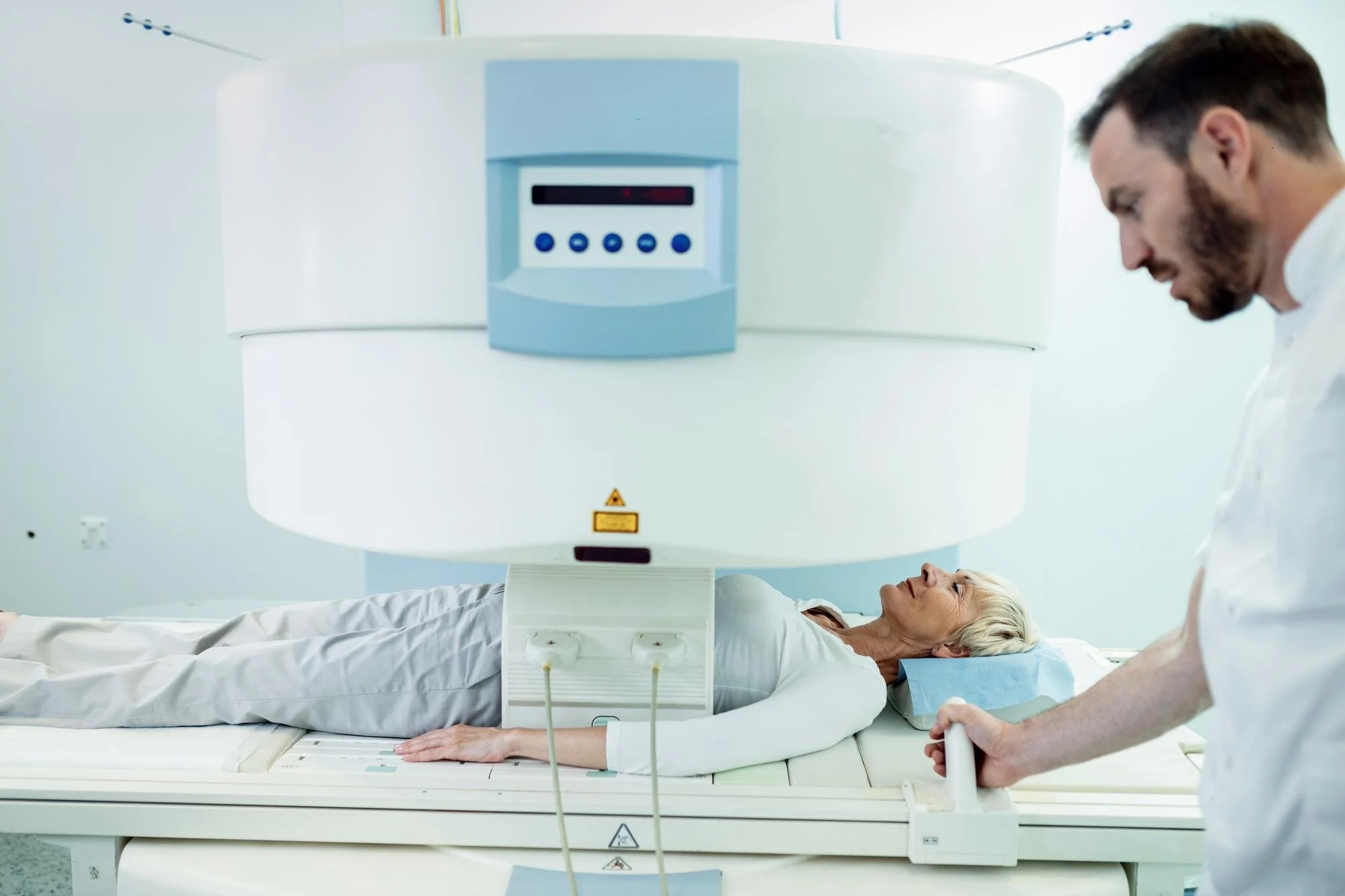
What is Nuclear Medicine?
Nuclear medicine is the branch of medicine that involves the administration of radiopharmaceuticals in order to diagnose and treat disease. The scanner produces images by detecting a small amount of a radioactive tracer in your body, which is either injected, swallowed or inhaled. The radiation has no side effects and will not make you feel any different.
The main difference between nuclear medicine and other imaging modalities is that nuclear imaging shows how the tissue or organ being scanned is functioning, while the traditional systems such as computed tomography (CT) and magnetic resonance imaging (MRI scan) show only the anatomy or structure.
‘SPECT' imaging allows us to view nuclear medicine scans in 3-D and multiple different planes, which increases sensitivity and overall accuracy. The combination with multi-slice CT adds further diagnostic information by also allowing for very accurate anatomical localization.
Digital SPECT-CT provides better lesion detection compared to typical analogue imaging. The digital interface improves resolution even with faster imaging time and a lower radiation dose. This means the patient spends less time in the scanner, receives lower radiation exposure and has a better experience overall.
Our hybrid DIGITAL SPECT-CT is one of the most advanced scanners in New Zealand, offering exceptional image quality for superior disease detection, diagnosis and treatment.
What to expect
Before your scan
You need a referral in order to book this type of scan. You will be given specific instructions based on the type of scan you are having, e.g. full or empty bladder, fasting or medicine restrictions. Please let the technologist if you are pregnant, could be pregnant or are currently breast feeding.
During your scan
You are given a radioactive tracer, either intravenously, orally, or by inhalation. The nuclear technologist will decide which form of radioactive tracer you are given depending on the type of scan you are having. Sometimes after getting the tracer administered you may have to wait a period of time before the imaging can start. The imaging itself takes approximately 30 to 45 minutes.
After your scan
You are able to return to your normal activities. Your scans will be reviewed by a radiologist and the report will be sent to your doctor in a timely manner.
If you would like access to your images and report, please sign up to our Patient Portal.